
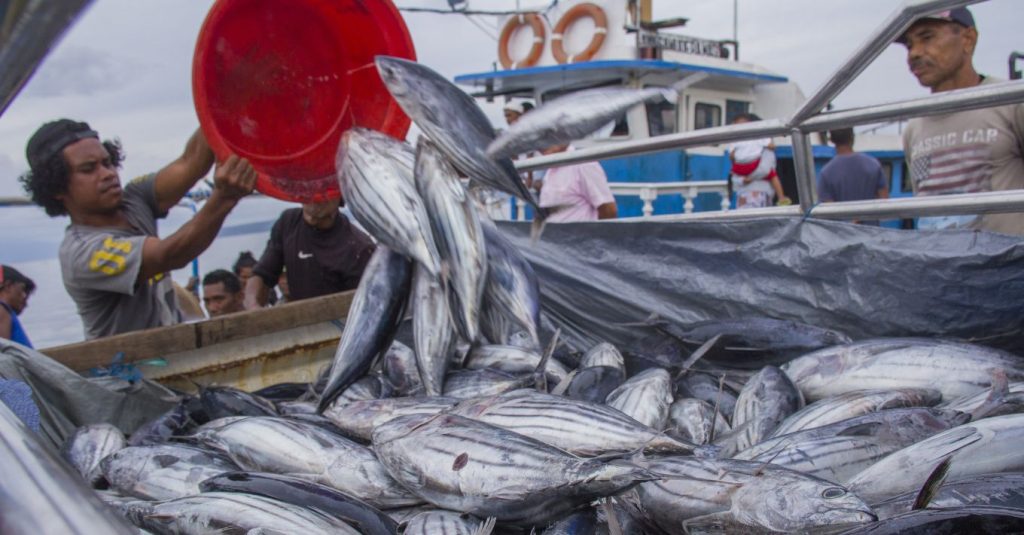
Indonesia’s strategic location and rich marine biodiversity have made it a top seafood exporter. With an exclusive economic zone covering 6.4 million square kilometers, Indonesia has a wealth of marine life, including tuna, shrimp, and crab. Combined with government support and sustainable practices, these factors have helped Indonesia become a global leader in seafood exports.
Key Factors Behind Indonesia’s Success
Marine Biodiversity: Indonesia is home to the Coral Triangle, often called the “Amazon of the Seas.” This area hosts over 2,000 fish species and 500 types of coral. Fish like tuna and grouper, along with shrimp and crabs, are harvested responsibly to protect the ecosystem.
Read more: The Rich Diversity of Indonesia’s Seafood: Tuna, Shrimp, and Beyond
Government Support: The Indonesian government has introduced policies to promote seafood exports. For example, the Maritime Axis Policy aims to improve maritime infrastructure. Additionally, export subsidies help local fishermen compete globally. Indonesia also collaborates with international organizations to adopt global standards for quality and sustainability.
Sustainability Efforts: Indonesia is working to fight overfishing and protect the environment. The government has introduced stricter regulations to stop illegal fishing. Certifications like the Marine Stewardship Council (MSC) guarantee that seafood is sourced sustainably, attracting eco-conscious consumers.
Learn more about sustainable seafood practices on the Marine Stewardship Council website
Market Insights
Indonesia’s seafood exports are mostly driven by tuna and shrimp, which dominate the global market. Major export destinations include the United States, China, and Japan. These countries have strict quality standards, prompting Indonesian exporters to secure certifications like MSC and Best Aquaculture Practices (BAP). As a result, Indonesia has built a strong reputation as a reliable supplier.
Read more: Top Seafood Export Markets for Indonesia and Their Demands
Explore global seafood market trends on FAO Fisheries and Aquaculture
Challenges and Future Growth
Despite its success, Indonesia faces challenges, including illegal fishing, limited access to advanced technology, and infrastructure issues in remote areas. To overcome these, the government is investing in digital tools for monitoring, upgrading fishing ports, and forming partnerships with international organizations. These efforts will boost productivity and ensure sustainability for the long term.
Read more: Challenges and Opportunities in Indonesia’s Seafood Export Industry
Read about global seafood regulations on World Trade Organization
The Road Ahead
Indonesia’s focus on innovation and sustainability will help it maintain its leadership in the seafood export market. As global demand for high-quality, sustainable seafood rises, Indonesia is well-prepared to meet this demand while protecting its marine ecosystems for future generations.
Read more: The Impact of Climate Change on the Global Seafood Industry